
What Windshield Tint Options Are Legal in Arizona in 2026? A Sierra Vista & Tucson Driver's Guide
Arizona's sun is relentless, and nowhere does that hit harder than through your windshield. Between triple-digit summer temperatures and some of the highest UV exposure in the country, it's no surprise Sierra Vista and Tucson drivers search for windshield tint options constantly — but windshield tint is also one of the most misunderstood parts of Arizona's tint law. Unlike side and rear windows, which give drivers a lot of freedom, the windshield is governed by much stricter rules, and getting it wrong can mean a citation, a failed inspection, or having to remove film you already paid for.
Here's the short answer for 2026: legal windshield tint in Arizona is limited to a non-reflective strip above the manufacturer's AS-1 line, and true full-windshield darkening film is not legal statewide, though nearly clear ceramic windshield films exist and are used by some drivers in a gray area of inconsistent enforcement. Below, we break down exactly what's allowed, what to avoid, and how to get real heat and UV protection on your windshield without risking a ticket.
Understanding Arizona's Windshield Tint Law
Arizona Revised Statutes 28-959.01 governs window tint statewide, and the windshield gets treated differently than every other window on your vehicle. Unlike front side windows, which have a defined VLT (visible light transmission) percentage you're allowed to go down to, the windshield rule isn't about darkness percentage at all — it's about location.
The AS-1 Line Rule
Arizona law permits non-reflective tint only above the manufacturer's AS-1 line, a marking typically found etched near the top edge of the windshield glass. This line usually sits around five inches from the top of the windshield, though the exact placement varies by vehicle make and model. Tint applied below that line — even a very light, nearly clear film — falls outside the legal strip zone.
Why Full Windshield Tint Isn't Straightforward
Because the statute restricts windshield film to the area above the AS-1 line, applying film across the entire windshield technically falls outside what the law explicitly permits, regardless of how light or dark the film is. That said, ultra-clear ceramic windshield films with very high VLT ratings (often 70% or higher) are increasingly common among Arizona drivers seeking heat and UV protection without a visible darkness change, and enforcement around these clear films varies by jurisdiction and officer discretion. If you're considering a full-windshield ceramic film, it's worth having a direct conversation with your installer about current local enforcement practices and being aware this sits in a less clearly defined part of the law.
Legal VLT Requirements for the Rest of Your Vehicle
While the windshield has its own location-based rule, understanding the full picture of Arizona's tint law helps you plan a windshield strategy that fits with the rest of your vehicle's tint.
| Window | Arizona Legal Requirement (2026) |
|---|---|
| Windshield | Non-reflective tint only, above the AS-1 line |
| Front side windows | Must allow more than 33% VLT (±3% tolerance) |
| Back side windows | Any darkness permitted |
| Rear window | Any darkness permitted |
| Reflectivity (front/back side windows) | Up to 35% reflectance (±3% tolerance) |
| Restricted colors | Red and amber tint are prohibited statewide |
Arizona is notably more flexible than many states when it comes to rear glass — there's no minimum VLT requirement on back side windows or the rear window, which gives Sierra Vista and Tucson drivers a lot of room to maximize heat and privacy protection everywhere except the front windshield and front side windows.
Windshield Film Options That Work Within Arizona's Legal Framework
Even with the AS-1 line restriction, there are legitimate ways to reduce heat and UV exposure through your windshield without stepping outside the law.
| Option | Legal Status | Heat/UV Benefit | Best For |
|---|---|---|---|
| AS-1 line strip (non-reflective) | Fully legal statewide | Reduces glare at eye level | All drivers, standard install |
| Clear/near-clear ceramic full windshield film | Gray area; not explicitly authorized by statute, enforcement varies | High UV rejection with minimal visible darkening | Drivers prioritizing sun protection who understand the compliance nuance |
| Reflective/mirrored windshield film | Not legal in Arizona | N/A | Not a compliant option in this state |
| Colored (red/amber) film | Illegal statewide, any window | N/A | Not a compliant option in this state |
For drivers who want dependable, no-question-legal protection, the AS-1 strip paired with legal front and rear side window tint remains the most straightforward path. For those interested in whole-windshield UV and heat control, a conversation with a licensed installer about current film technology and local enforcement is the right next step before moving forward.
Arizona consistently ranks among the hottest states in the country, and southeastern Arizona communities like Sierra Vista and nearby Tucson see months of intense, direct sun exposure. Because the windshield is the largest single piece of glass on most vehicles and sits directly in the driver's line of sight, it's also where sun-related heat, glare, and UV exposure hit hardest during daily driving.
Even within Arizona's stricter windshield rules, drivers still get meaningful protection from a properly installed AS-1 strip combined with legally tinted side and rear windows — reducing glare at eye level, cutting UV exposure on the drive, and helping keep cabin temperatures more manageable during Arizona's long, hot season.
What to Expect When Getting Windshield Tint Installed
If you're pursuing legal windshield tint in Arizona, here's what a professional installation typically involves:
- Vehicle assessment. Your installer identifies your windshield's AS-1 line location and reviews your existing tint (if any) on side and rear windows to plan a cohesive, compliant setup.
- Film selection. You'll choose from options based on glare reduction, UV rejection, and appearance — including ceramic film technology for maximum heat performance within whatever zone is being treated.
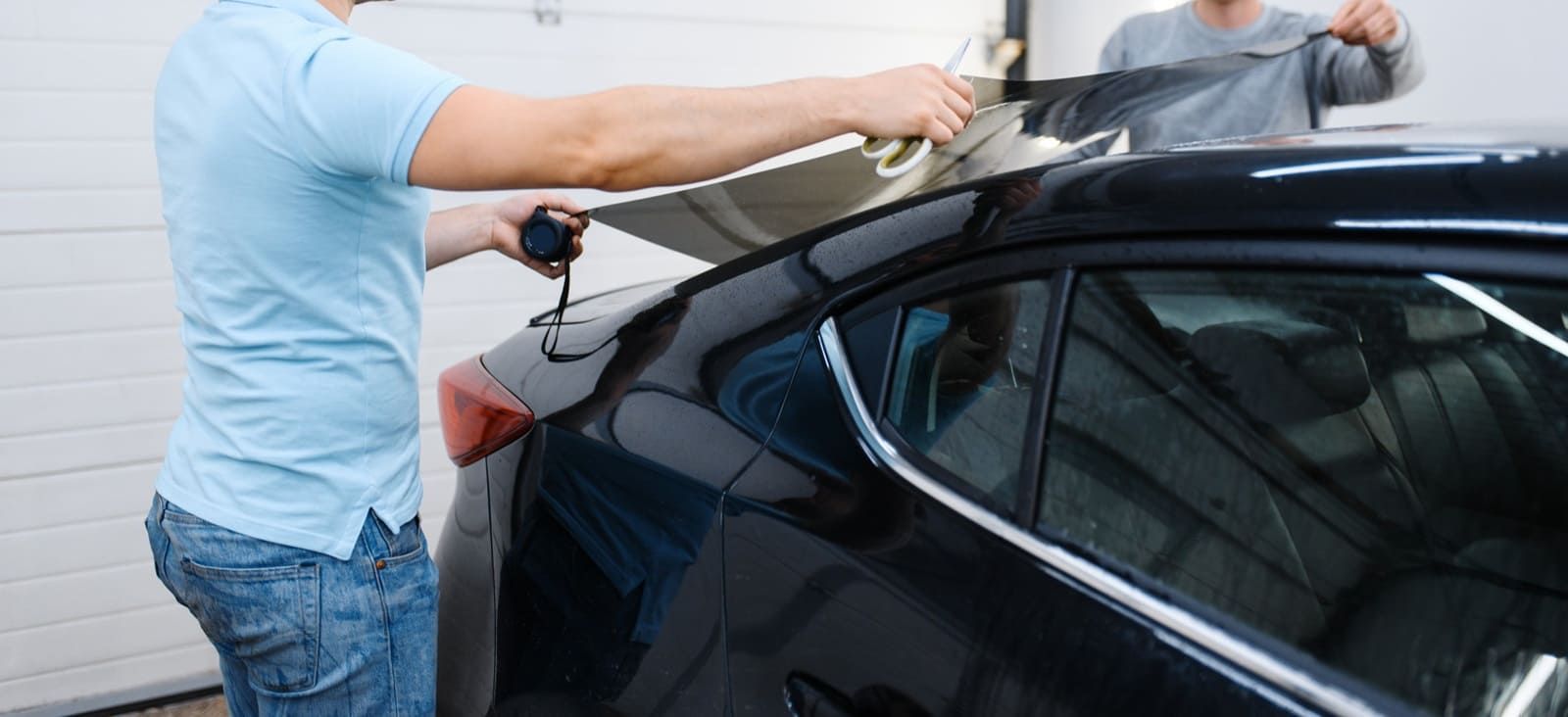
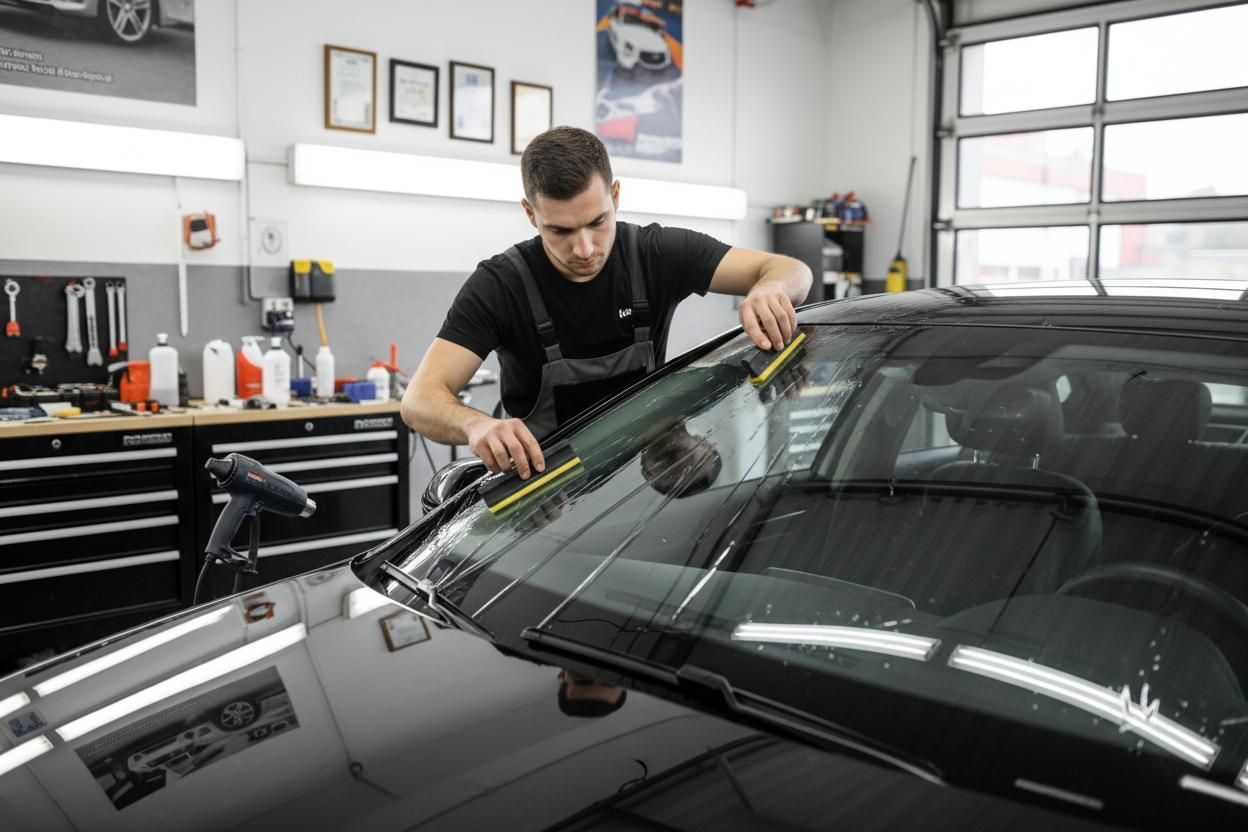
- Precision application. Film is cut and applied specifically to the legal strip area, or, if pursuing a full-windshield ceramic option, applied edge to edge with attention to a clean, bubble-free finish.
- Curing period. Freshly applied film needs several days to fully bond to the glass before washing or rolling windows down near the treated area.
- Compliance review. A reputable installer will walk you through how your finished vehicle aligns with Arizona's tint law so you know exactly what you're driving with.
What Happens If Your Windshield Tint Isn't Legal?
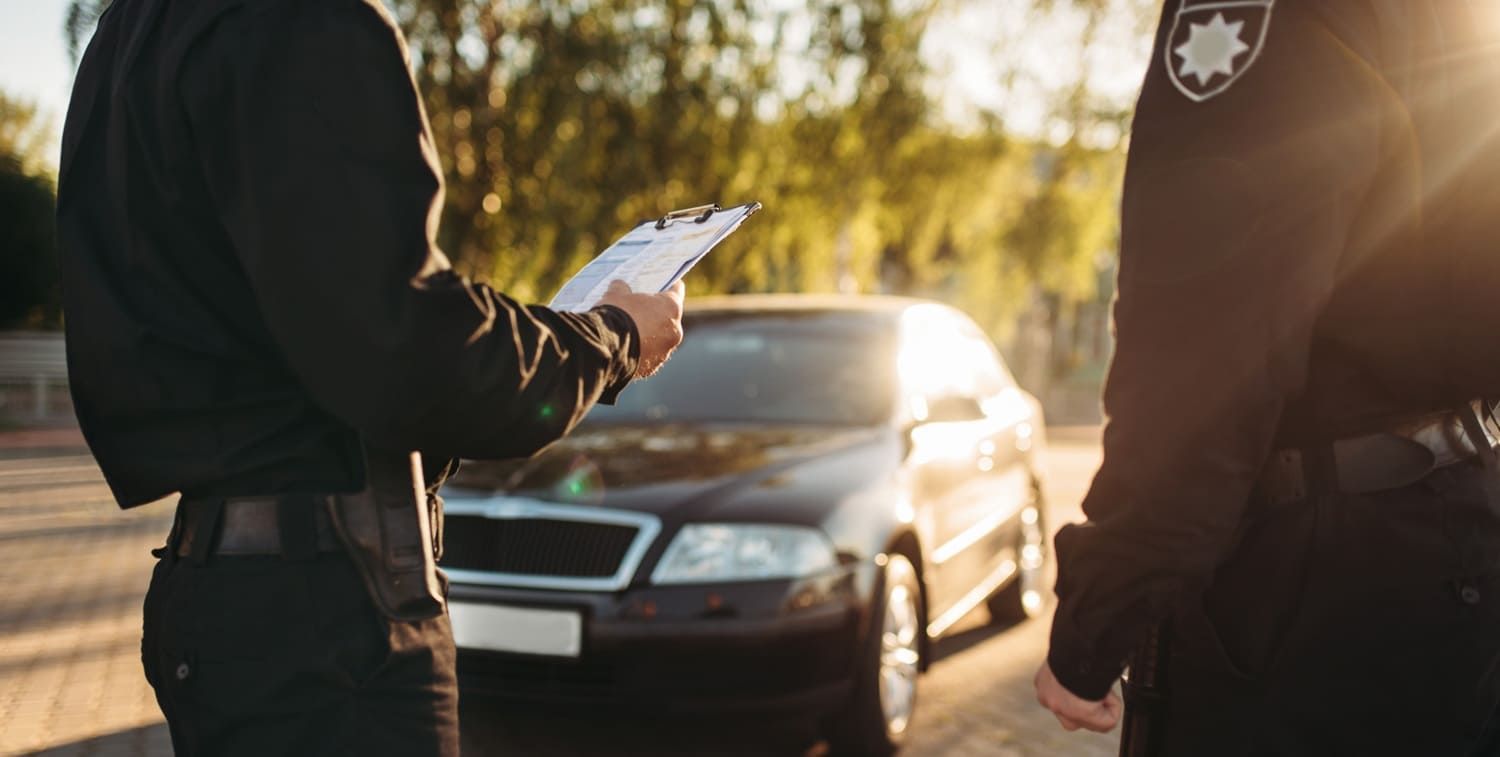
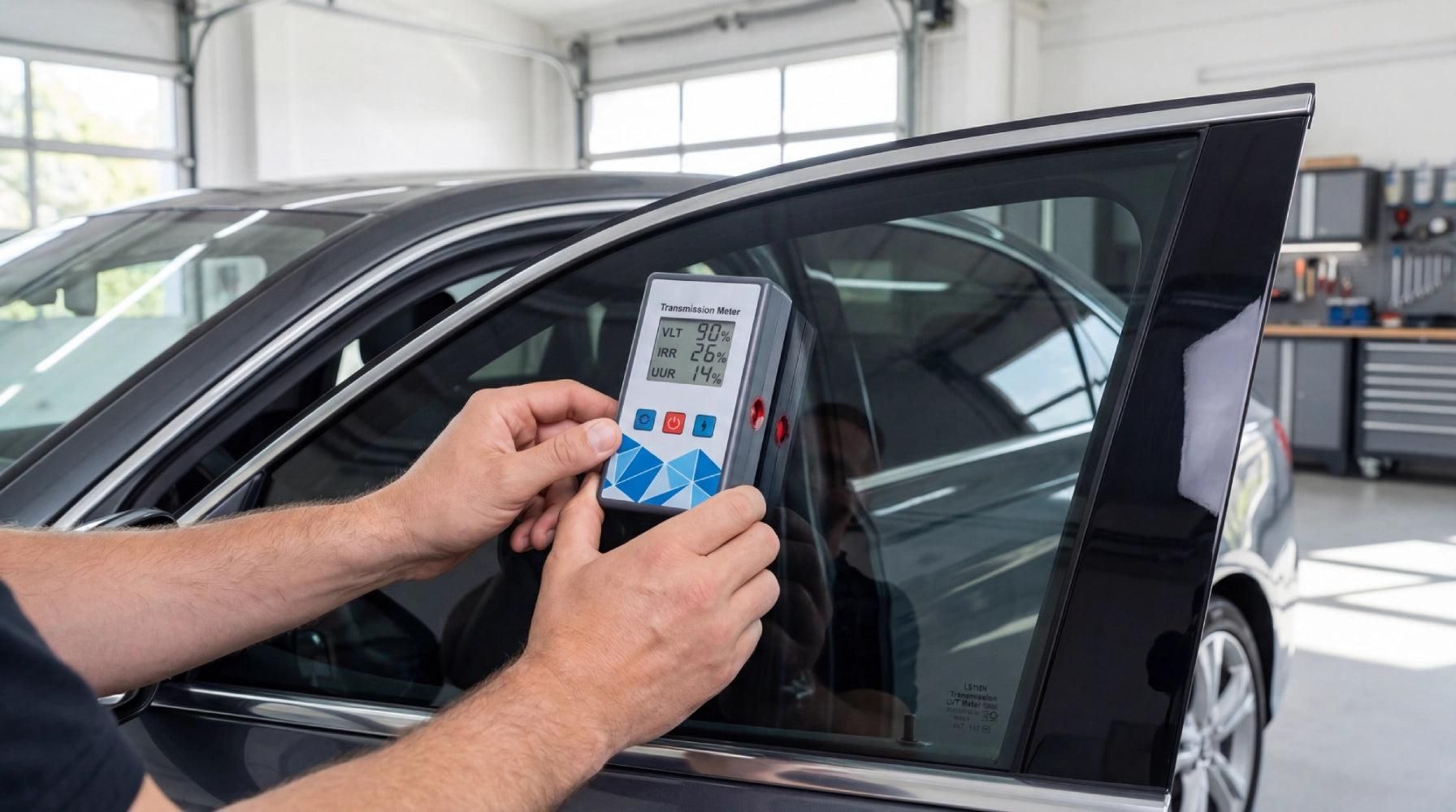
Arizona treats illegal window tint as a traffic violation, with first-offense fines typically ranging from $100 to $250 and second or subsequent offenses running higher. Officers use a calibrated tint meter to measure VLT during a stop, and windshield placement issues (film applied below the AS-1 line) can be identified visually. Getting cited doesn't just mean a fine — it can also mean being required to remove or modify the film, which costs additional time and money on top of the original installation.
Working with an experienced local installer who understands Arizona's specific windshield rules is the most reliable way to avoid this outcome, since they can help you choose a setup that delivers real comfort and protection while staying within the law.
Frequently Asked Questions About Legal Windshield Tint in Arizona
Is any windshield tint legal in Arizona?
Yes — non-reflective tint is legal above the manufacturer's AS-1 line, which is typically located near the top of the windshield. Tint below that line is not explicitly authorized under Arizona's statute.
Can I get my entire windshield tinted in Arizona?
Full windshield darkening tint isn't clearly authorized under Arizona law, though very light, nearly clear ceramic windshield films are used by some drivers, with enforcement varying by location. Talk with a local installer about current practices before choosing this option.
What is the AS-1 line?
The AS-1 line is a manufacturer-marked line near the top of the windshield, usually etched into the glass, that indicates where non-reflective tint is legally permitted in Arizona.
How dark can my front side windows be in Arizona?
Front side windows must allow more than 33% VLT, with a ±3% tolerance. Anything darker than that on the front windows is not legal.
Are back windows and rear windshields restricted in Arizona?
No — Arizona allows any darkness level on back side windows and the rear window, giving drivers significant flexibility for privacy and heat control on those windows.
What happens if I'm pulled over with illegal windshield tint?
You may receive a citation, with first-offense fines generally between $100 and $250. Officers use a tint meter to verify VLT compliance, and you may be required to remove or adjust non-compliant film.
Does Arizona allow medical exemptions for darker tint?
Yes. Arizona allows medical exemptions through the Arizona Department of Transportation with proper physician documentation, which must typically be kept in the vehicle.
Get Legal, Heat-Fighting Window Tint in Sierra Vista, AZ
Navigating Arizona's windshield tint rules while still getting real relief from desert heat and glare is exactly the kind of question a local, experienced installer can answer clearly. Cool Dreams Window Tinting, located at 570 Bartow Dr in Sierra Vista, AZ, serves drivers throughout Sierra Vista, Tucson, and the surrounding Arizona area with auto window tinting solutions — including ceramic film options — installed with Arizona's tint law in mind. Contact Cool Dreams Window Tinting for a free auto tint estimate and get a windshield and window tint setup that keeps you cool, comfortable, and compliant.